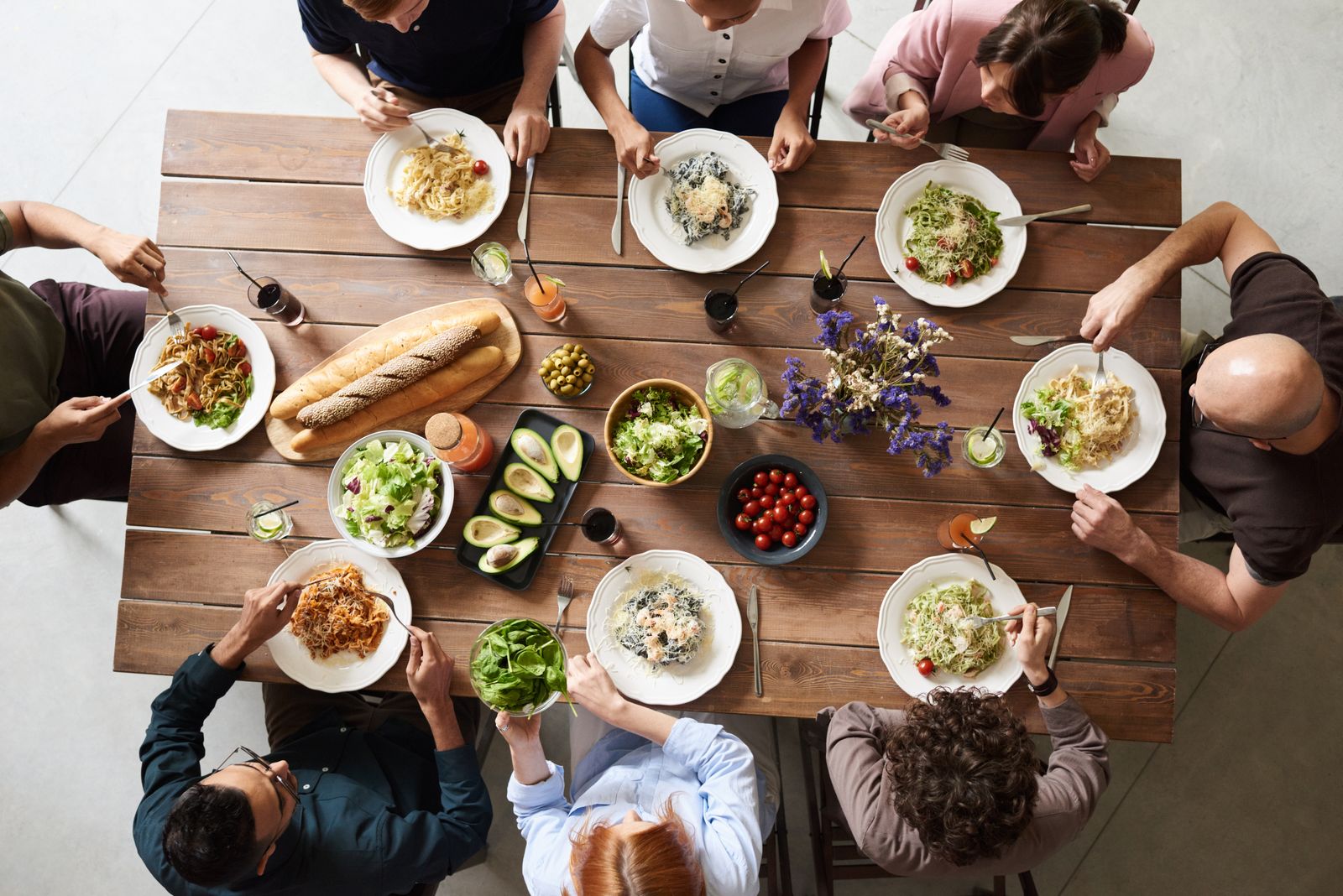
I Ran a Cooking Competition Every Month for a Year — Here's What I Learned (and Earned)
I hosted 12 home cooking competitions in 12 months. Here's every mistake, surprise, and dollar earned along the way.
Key Takeaways
- Running monthly cooking competitions turns a one-off dinner party into a recurring social ritual people actually look forward to.
- The best themes aren't the fanciest — budget constraints and weird ingredients consistently produce the most memorable nights.
- Scoring systems matter more than you think: vague judging kills the fun fast.
- First-timers in the kitchen beat experienced cooks more often than you'd expect — five times out of twelve, in my case.
- You can offset (or even profit from) the hosting costs with simple entry fees and a prize pot structure.
- A platform like Dine With Me makes organising the logistics — sign-ups, themes, scoring — dramatically easier than a WhatsApp group.
January 1st last year I made a resolution I actually kept: host one cooking competition a month, every month, for twelve months straight. No skipping February because it’s cold. No pausing in August because everyone’s on holiday. Twelve months, twelve battles, twelve different themes — and one genuinely surprising lesson about what makes people show up, cook their hearts out, and beg to come back.
By December I’d hosted 96 competitors across the year, tried 11 different scoring formats, spent (and recovered) more money than I’d expected, and watched a 22-year-old who’d never poached an egg win a five-course challenge. Here’s everything I learned — month by month, mistake by mistake.
Month 1: The Format That Almost Killed the Whole Thing
January’s competition was a free-for-all. Eight people, no theme, just “cook your best dish.” The result? Three pasta dishes, two roast chickens, and one person who brought a store-bought quiche and called it “deconstructed.” The judging devolved into a popularity contest and someone left in a mild huff. Zero dramatic tension. Barely worth the washing up.
The lesson was immediate and brutal: constraints are the engine of a great competition. Without a theme, a budget cap, or a mystery ingredient, people default to their comfort zone — and comfort zones are boring to watch. Every month after January had a tight brief, and every month after January was genuinely brilliant.
Never run a free-for-all as your first competition. A narrow brief — one protein, one price ceiling, one wild card ingredient — creates drama, levels the field, and gives you something to score against.
The Themes That Worked (and the Ones That Flopped)
Over the year I cycled through twelve distinct themes. Some were obvious hits. Others were catastrophic misfires I’m sharing so you don’t repeat them. Here are the standouts — the themes that generated the most energy, the best food, and the most text messages the next morning.
The £10 Budget Battle
Each competitor gets exactly £10 to spend at any shop they like. Every receipt is checked at the door. The constraint is the competition — and watching someone turn a chicken thigh, a tin of tomatoes, and some dried pasta into something genuinely stunning is endlessly entertaining.
This format also completely eliminates the experience advantage. A home cook with good instincts and a bargain-hunter’s eye beats the technically trained chef who reaches for expensive ingredients on autopilot.
The Mystery Box Round
Everyone gets an identical box of six ingredients revealed 10 minutes before cooking starts. No substitutions. No extras. The box in April contained: tinned sardines, dark chocolate, pomegranate seeds, sourdough, a fennel bulb, and crème fraîche. The dishes were genuinely inventive — and two were actually delicious.
The mystery box format is lifted straight from MasterChef for a reason: it creates genuine jeopardy in real time. You can feel the panic and watch people improvise on their feet. That’s television — and it’s even better live.
The Childhood Dish Remake
Competitors had to recreate a dish from their childhood — but with a gourmet upgrade. Fish fingers became panko-crusted hake with a caper aioli. Tinned spaghetti hoops became a handmade pasta with a San Marzano reduction. The judging criteria included both nostalgia and execution, which gave less technically skilled cooks a genuine shot.
This was also the most emotionally engaging night of the year — stories got told, a couple of people got unexpectedly sentimental, and the conversation around the table after was the best of any month.
The Couples Cook-Off
Four couples, one dish each, cooked together. The catch: one person handled prep, the other handled cooking — no swapping. Watching couples negotiate knife skills and oven temperatures in real time is genuinely hilarious, and the dynamic of shared stakes makes people try harder than they do solo.
This format works brilliantly for date nights that need a bit of fresh energy, and it scales easily. Six couples is still manageable in a medium kitchen if you stagger the cooking times.
Scoring: The System That Finally Worked
I went through five different scoring formats before landing on the one that worked. Simple 1-to-10 across the table creates grade inflation — everyone scores their friend an 8, which means everything lands between 7.2 and 7.8 and nobody wins decisively. Ranked choice (everyone ranks all dishes) is cleaner but causes choice paralysis when there are more than six entries.
The format that worked best: three blind judges score on taste, presentation, and theme adherence (10 points each), while the rest of the table votes on a single “people’s choice” award worth 5 bonus points. The judges are rotated each month so no one feels like they’re always on the panel. Two trophies (or fake trophies — a spatula on a plinth is fine) means there are two genuine moments of drama at the reveal.
Blind judging — where the judges don’t know who cooked which dish — removes social bias almost entirely. Use numbered plates and have someone not in the competition plate up for the judges.
The Money: What It Cost and What Came Back
Let’s be honest about the economics. Hosting eight people twelve times is not free — even when competitors bring their own ingredients. There are prizes, drinks, the judging table spread, and the accumulated cost of your time and kitchen. Here’s how I structured it so it cost me almost nothing by month four.
- Entry fee of £8–£12 per person — goes into a prize pot, with 70% to the winner and 30% to a runner-up prize (usually a nice bottle of wine).
- Competitors bring all their own ingredients — the host provides the kitchen, the equipment, drinks, and judging table snacks.
- Season pass option — I sold a four-month season pass for £35 in advance, which gave me guaranteed attendance and upfront cash for supplies.
- One charity round per quarter — entry fee doubled, half goes to a local food bank. This brought in new participants who might not have joined otherwise.
- Photography add-on — from month six, I charged an optional £5 for a shared album of the night. Eight people paying £5 each covers a decent bottle and more.
By the end of the year, the competitions had covered all their own costs and generated just over £340 in surplus — split between charity donations and a single “grand finale” prize for the year’s overall champion. Not a side hustle income, but not a loss either. And the social capital — the group of 30-odd people who now text me asking when the next one is — is worth considerably more.
Ready to run your own competition? Dine With Me makes it easy to set up sign-ups, themes, and scoring in minutes.
Create Your CompetitionThe Winner Pattern That Surprised Me Most
Here’s the stat that genuinely shocked me when I tallied it up in December: five of my twelve monthly winners had never cooked competitively before — and three of them described themselves as “not really cooks.” One was a PhD student who ate mostly meal deals. One was a retired accountant whose culinary repertoire was apparently limited to a single bolognese. One was a 22-year-old who had never owned a frying pan.
What they all had in common: they read the brief very carefully, they didn’t overthink the technique, and they cooked something they actually liked eating rather than something they thought would impress. Experienced home cooks, I noticed, tend to overcomplicate their entries. They add a foam, attempt a gel, try a technique they’ve seen on television but never practised. The first-timers just cook with conviction.
“I didn’t know what I wasn’t supposed to do, so I just did what tasted good to me.” — Marcus, 22, winner of the April Mystery Box round (with a sardine and dark chocolate tapenade that should not have worked but absolutely did).
What I'd Do Differently in Year Two
A year in, I’ve got a list of changes I’m already building into the next twelve months. Some are logistical tweaks. Some are format upgrades. All of them come from watching what created energy in the room and what quietly deflated it.
- Introduce a wildcard rule — one judge each month gets a “wildcard veto” that overrides the scores for a single dish if they feel strongly enough. It sounds chaotic. It absolutely is. That’s the point.
- Theme reveal 48 hours ahead, not the night of — giving competitors two days to plan (but still imposing the constraint) raised the quality of dishes noticeably in the months I tried it.
- Add a “worst dish” award — a wooden spoon trophy for the lowest-scoring entry, accepted in good humour, became the most-laughed-about moment of the evenings it appeared.
- Use a platform instead of WhatsApp — managing 8-10 people’s sign-ups, dietary requirements, and score sheets over text is a logistical nightmare. From month three I switched to Dine With Me’s competitions tool and the admin time halved.
Browse competitions already running near you — or get inspiration for your next theme.
Explore CompetitionsHow to Start Your Own Monthly Series
You don’t need twelve months of experience to start. You need a kitchen, a date, and a group chat. The rest emerges. But if you want to avoid the mistakes I made in January, here’s a quick-start framework that gets you to a great first night with minimal planning.
1Pick a tight theme with a constraint
Choose a budget cap (£10–£15 per person works well), a single hero ingredient everyone must use, or a cuisine style. The constraint is the game — everything else follows from it.
- Budget Battle
- Mystery Box (reveal on the night)
- One-ingredient hero (e.g. everyone must use eggs as the star)
2Invite 6–10 people with mixed skill levels
Mixed skill levels create better drama and more unexpected winners. A group of all experienced cooks produces technically good food and very little chaos. Chaos, in controlled doses, is the entertainment.
3Set up scoring before the night
Decide your judging format in advance and communicate it clearly. Three blind judges plus a people’s choice vote is the format that generates the most post-competition conversation — and the fewest arguments.
4Collect a small entry fee and create a prize pot
£10 per person from 8 competitors gives you an £80 pot. £56 to the winner, £24 for a runner-up prize. It costs you nothing to host (beyond your kitchen), and the stakes make people take it seriously.
5Book the next date before people leave
The single most effective thing I did all year: announce the next month’s theme and date while everyone is still in the room, full, happy, and mildly competitive. Commitment rates at that moment are near 100%. Commitment rates via WhatsApp three days later are approximately 40%.
Twelve months in, the monthly competition has become the social fixture my friend group didn’t know it needed. People plan around it. New people ask to join. Two participants have since launched their own versions in different cities. One started hosting paid cooking lessons on Dine With Me after realising she was the most consistent performer of the year — and wanted to teach what she’d learned.
The food is almost secondary. What people are actually showing up for is the structure, the stakes, the story — and the chance to sit around a table with people they like and feel something. A cooking competition gives you all of that, reliably, for the cost of a round of drinks.
Year two starts next month. The theme is “one pan, ten minutes, no excuses.” If you want to run your own version — with sign-ups, themes, and scoring handled for you — Dine With Me gets you set up in under two minutes. The first competition is always the hardest one to launch. Every one after that runs itself.
Related Articles
I Hosted a Come Dine With Me Night for 6 Strangers — What Actually Happened
I recreated Come Dine With Me at home for 6 strangers. The drama, the scores, the food — here's exactly what happened (and what I'd do differently).
COMPETITIONSI Ran My First Cooking Competition — Here's What I'd Do Differently
I hosted my first home cooking competition for 6 friends — it was chaotic, hilarious, and full of mistakes. Here's exactly what I'd change next time.
COMPETITIONSSame Recipe, 4 Cooks, One Winner — The Dish Got Wild
We gave 4 friends the exact same recipe. What landed on the plate was anything but the same. Here's what happened — and how to run it yourself.
Stay in the loop!
Get cooking tips, competition updates, and new features delivered to your inbox.
No spam, unsubscribe anytime.